




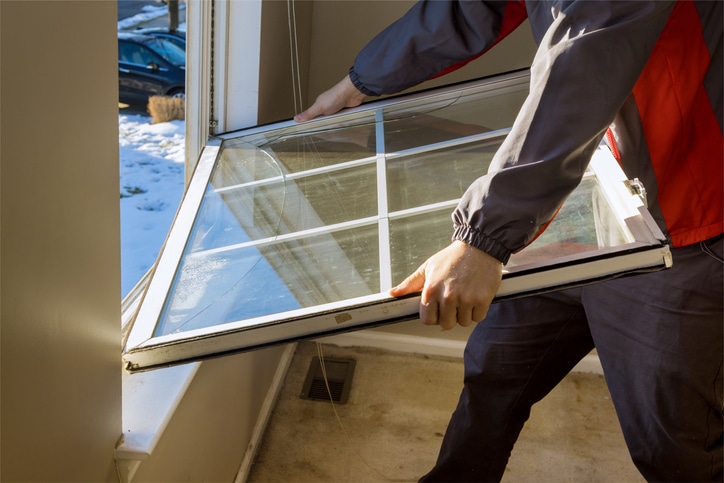
Windows haven’t always had glass panes. The practice started around 100 AD when Egyptians of the Roman Empire put it in theirs. The bad news is that it was so thick and opaque that you couldn’t see out of it. Windows with glass panes were also exclusively for rich folks. Indeed, it was not until the 17th century for glass windowpanes to be common and the 19th and 20th centuries for them to be mass-produced and relatively cheap. Here’s how window glass is made.
First, the Ingredients
The ingredients that go into making window glass, or any kind of glass for that matter, are simple and fairly easy to find. However, they have to be mixed in the proper proportions to make glass that’s viable. These ingredients are:
- Between 70% and 75% silica sand
- Limestone
- Soda ash or sodium carbonate
- Cullet (recycled glass) for faster melting
The glassmaker can also include additives such as metals to color the glass and fining compounds that make sure the glass is free of air bubbles as it melts.
Melting the Batch
When the batch is just right, the glassmaker puts it in a furnace. Its temperature is over 2,732 F to make sure the ingredients fuse together to create liquid glass.
Floating the Glass
The goal when constructing a good, strong window is to make it utterly flat. To do this, the glassmaker slowly pours the liquid glass over melted metal, most usually tin. If you’re wondering why they use molten tin in the float glass process, it’s because it’s perfectly flat and stays stable over a range of temperatures. Tin is also denser than glass, which means the glass can be spread evenly on top of it.
After the glass is spread over the tin, it cools down and solidifies. The glassmaker and their team make sure that the glass cools in a controlled way to make it strong.
Cutting the Glass
Once the glass is completely cool and solid, it can be cut into windowpanes of different sizes. Nowadays, window glass can be tempered or laminated. When the glassmaker tempers the glass, they heat it to a very high temperature and then cool it down quickly. This makes it not only strong but, if it shatters, it’ll break into nuggets instead of dangerous long shards.
When glass is laminated, it’s pressure-bonded to another sheet of glass with PVB. This also makes window glass stronger and safer because the glass won’t shatter into shards even if it’s broken.
Glassmaking has been going on since antiquity, and it’s always a fascinating procedure. If you live in Allentown, PA or a surrounding area and need window installation services, make your first call to Bachman’s Roofing.
